
To effectively enhance the research capacity of scholars and practitioners in the field of information resource management, deepen understanding of cutting-edge theories and practical innovations in the discipline, master the key points of research project applications and academic paper writing, become familiar with diverse research methodologies, improve academic literacy, and produce research outcomes of both higher quality and quantity, the Chinese Academy of Sciences National Science Library (CASNSL), in collaboration with Tianjin Normal University, successfully held the 2026 Symposium on Research Project Applications and Scholarly Paper Writing in Information Resource Management” in Tianjin from March 21 to 22, 2026.
The symposium was jointly organized by the Editorial Office of Library and Information Service (LIS) and the School of Management at Tianjin Normal University (TNU). More than 180 experts, scholars, and practitioners from research and practice fields related to information resource management attended the event.
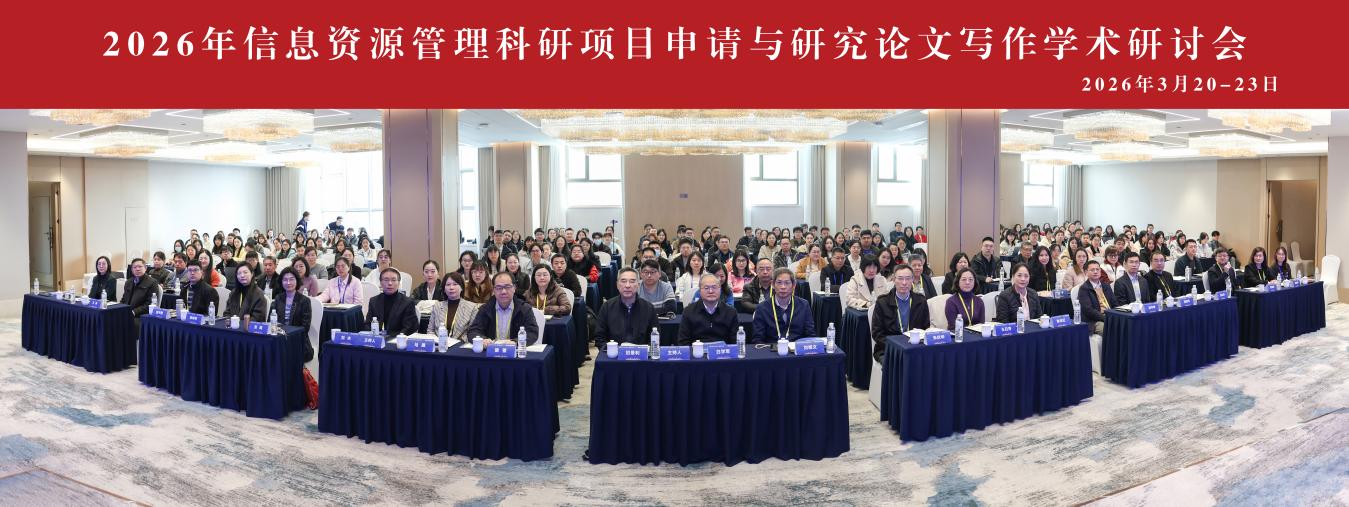
Group photo of symposium participants.
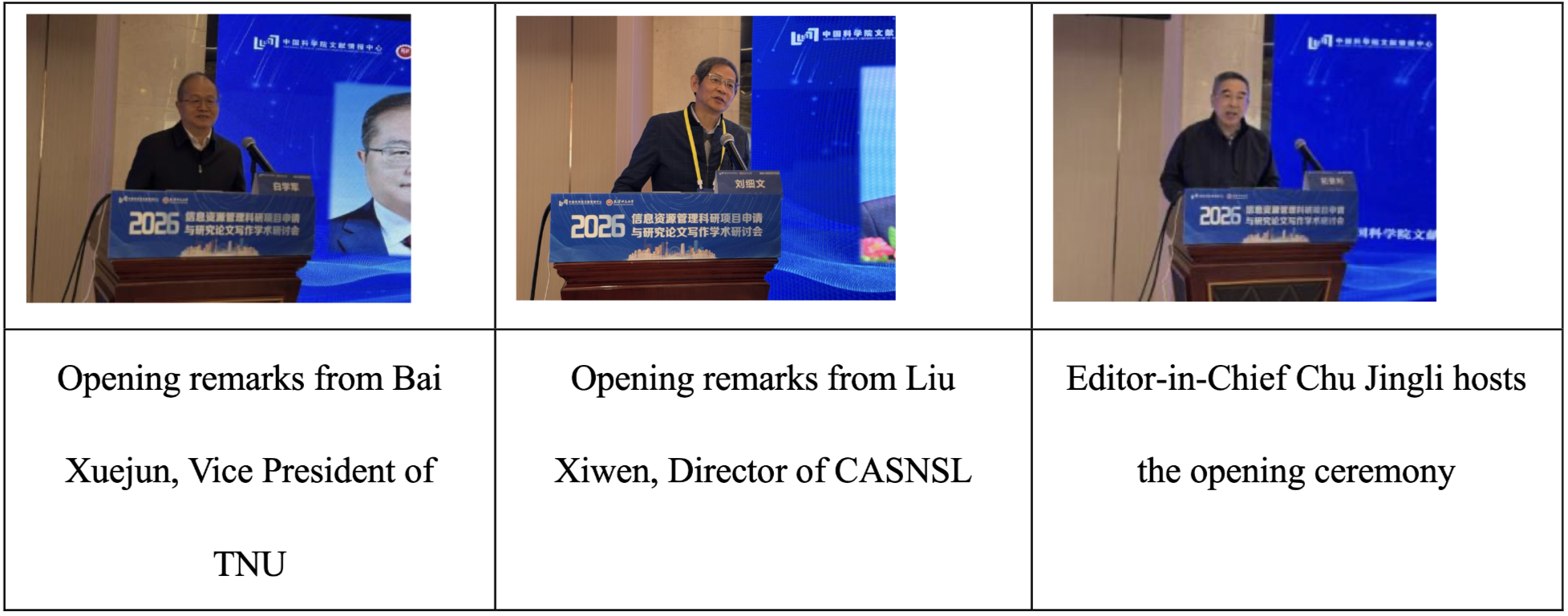
The opening ceremony of the symposium was chaired by Professor Chu Jingli, Director of the Academic Committee of CASNSL and Editor-in-Chief of LIS. Opening remarks were delivered successively by Professor Bai Xuejun, Member of the CPC Standing Committee and Vice President of TNU, and Researcher Liu Xiwen, Director of CASNSL.
Vice President Bai Xuejun pointed out that the key to success in scientific research lies in sustained and persistent effort. At present, the nation places great emphasis on building China’s independent knowledge system and achieving high-level scientific and technological self-reliance. Young scholars should closely align their research with these two major directions, so as to effectively improve the quality and level of innovation in research project applications. Director Liu Xiwen noted that the rapid development of new-generation information technologies and artificial intelligence has brought unprecedented opportunities and challenges to disciplinary development. The field of information resource management should take proactive action, seize opportunities, uphold its disciplinary identity, and strengthen independent thinking, thereby leveraging its professional strengths to lead future development in the field.
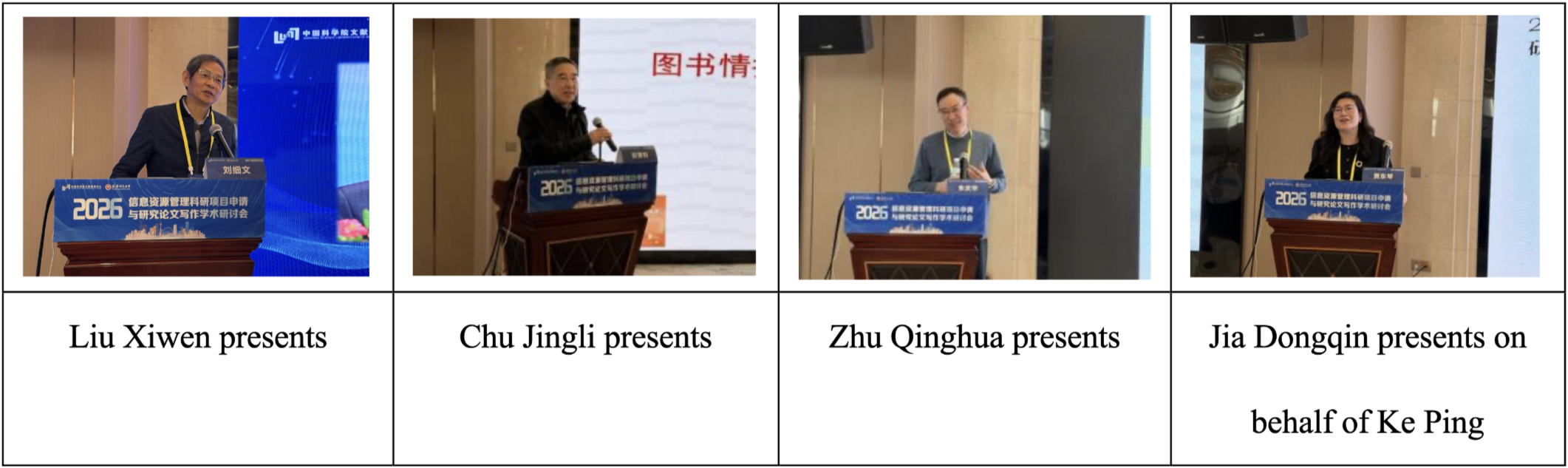
The first half of the morning session on March 21 was chaired by Professor Liu Bing, Dean and Doctoral Supervisor at the TNU School of Management. Researcher Liu Xiwen, CASNSL Director delivered a presentation titled “Research and Scholarly Papers Writing in Information Science,” in which he provided a systematic exposition on the connotations and research orientations in information science, and developments in the field under the background of AI, offering clear guidance for research and academic writing in the new era. Professor Chu Jingli presented a report titled “Theoretical and Practical Research in Library and Information Science,” elaborating systematically on the positioning of theory and practice, peer review orientations, the industry value driven by research, the relationship between theory and practice, and existing issues. He emphasized that research in library and information science should achieve deep integration between theory and practice, enhancing the academic rigor of practice-based research and the applicability of theoretical research.
The second half of the morning session on March 21 was chaired by Professor Chu Jingli. Professor Zhu Qinghua from the School of Information Management, Nanjing University, delivered a presentation titled “Reflections on Applying for National Natural Science Foundation and Social Science Foundation Projects,” sharing his insights across four aspects: personal experience in project applications, a comparison between the National Natural Science Foundation and the National Social Science Foundation, answers to common questions in the application process, and a summary of key takeaways. His presentation provided practical and highly actionable guidance for scholars and graduate students seeking to improve the quality of their project applications.
The presentation “Research Hotspots in the Field of Information Resource Management” by Professor Ke Ping of the Department of Information Resource Management, Nankai University, was delivered on his behalf by Professor Jia Dongqin of Tianjin Normal University. The report systematically clarified the distinction between research hotspots and research frontiers, and offered a detailed interpretation of current core research hotspots in the field, focusing on themes such as AI, data elements, information behavior, and digital literacy. It provided clear directions and important references for participants to grasp academic frontiers and conduct high-quality research and project applications.
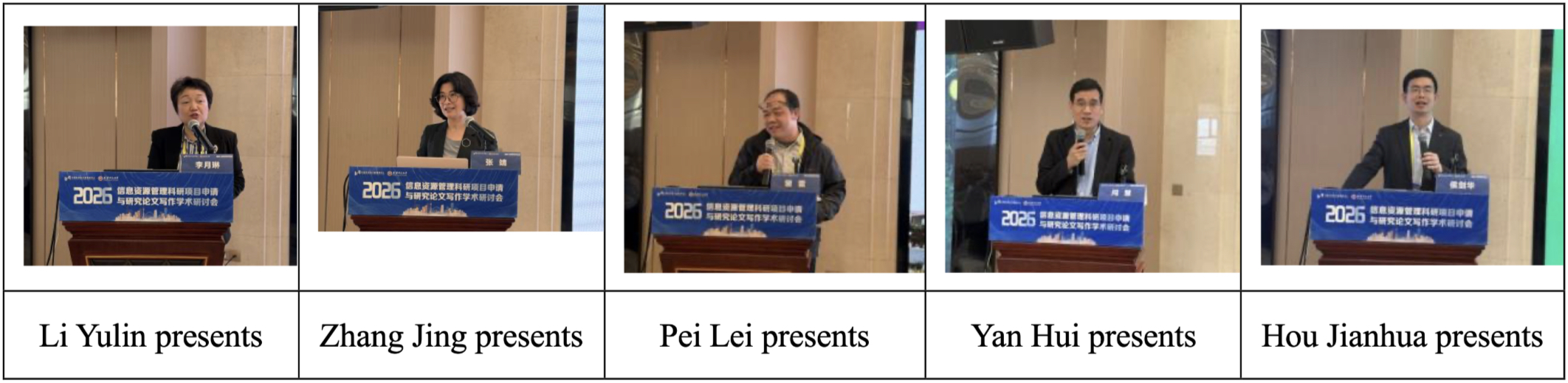
The first half of the afternoon session on March 21 was chaired by Associate Professor Zhai Yujia of TNU. Professor Li Yuelin, Assistant to the President of Nankai University, delivered an academic report titled “Mixed and Multiple Research Methods and Their Applications.” From the three dimensions of “What, Why, and How,” she systematically elaborated on the core connotations, design logic, and practical implementation paths of mixed and multiple research methods, providing directly applicable methodological paradigms and practical guidance for attending faculty and students to conduct high-quality, standardized academic research. Professor Zhang Jing from the School of Information Management, Sun Yat-sen University, presented a report titled “Policy Evolution and Key Issues in Public Cultural Services.” She systematically reviewed the development trajectory of China’s public cultural service policies and focused on key contemporary issues in this field, offering theoretical references and practical directions for the application of information resource management in the public cultural sector.
The second half of the afternoon session on March 21 was chaired by Professor Jia Dongqin. Professor Pei Lei from the School of Information Management, Nanjing University, delivered a presentation titled “The ‘Spiral’ of Problems and Methods: Computational Understanding and Intelligent Analysis in Policy Research.” Centering on the essence of scientific research, the refinement of research questions, and the norms of theory and methodology, he systematically explained how to distill scientific questions from real-world problems. He emphasized that good research should meet the criteria of feasibility, interest, novelty, rigor, and relevance, and pointed out that research entry points can be identified from three paths: gaps in the literature, contradictions in reality, and methodological deficiencies.
Professor Yan Hui from the School of Information Resource Management, Renmin University of China, presented a report titled “Fieldwork Methods: Application Scenarios and Cases.” He explained that the core of fieldwork lies in mapping social structures and identifying cultural patterns. Drawing on specific cases, he vividly outlined applicable scenarios for field research, providing useful references for its application in the field of information resource management.
Professor Hou Jianhua from the School of Information Management, Sun Yat-sen University, delivered a report titled “Data- and Intelligence-Driven Informetrics and Its Applications in Information Resource Management Research.” Focusing on the deep integration of digital-intelligent technologies and informetrics, he systematically expounded a new paradigm of informetrics empowered by large language models. He also demonstrated in detail how to use digital-intelligent tools for literature clustering, element extraction, relationship modeling, and trend forecasting, and shared empirical findings in areas such as measuring knowledge contributions in basic research, evaluating scientific and technological innovation, and the diffusion of scientific knowledge.
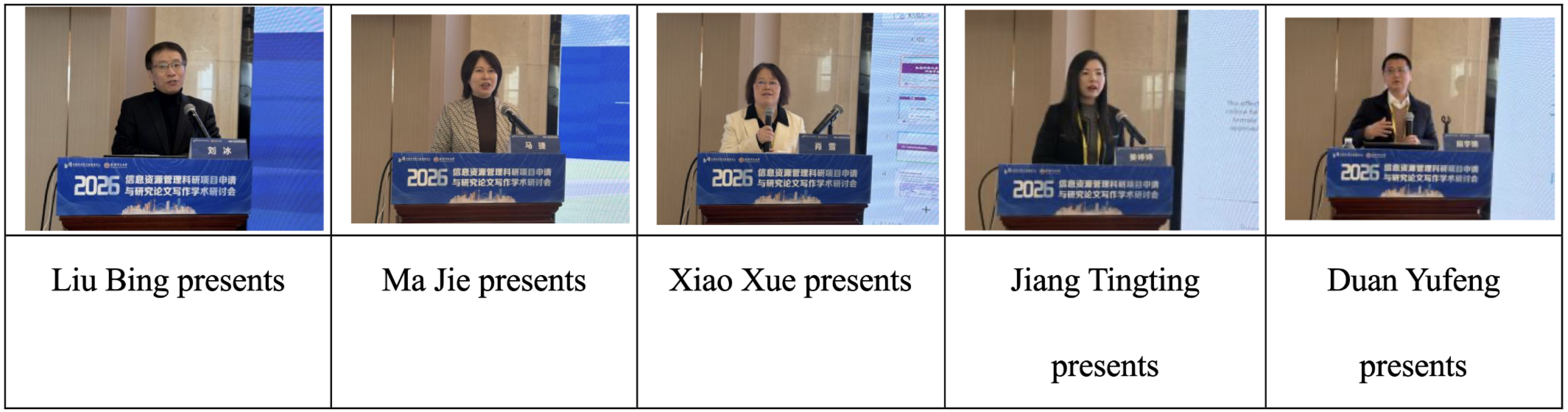
The morning session on March 22 was chaired by Research Librarian Du Xingye, Director of the Editorial Office of LIS. Professor Liu Bing, Dean of the School of Management at TNU, delivered a report titled “System Dynamics Simulation Methods: Application Scenarios in Emergency Information Disclosure.” He systematically introduced the origins, core principles, modeling processes, and application scenarios of system dynamics, noting that it is well suited for handling complex systems characterized by high order, nonlinearity, feedback, and time delays, and is often referred to as a “laboratory for policy and strategy.”
Professor Ma Jie, Vice Dean of the School of Business and Management at Jilin University, presented a report titled “Research Status and Writing of Thematic Papers on Data Elements.” She systematically reviewed current publication trends, research themes, disciplinary distribution, and research methods in the field of data elements, pointing out that data elements have become a strategic research hotspot in the context of new-quality productive forces.
Professor Xiao Xue from the Department of Information Resource Management, Nankai University, delivered a presentation titled “Grounded Theory and Its Standardized Application in Information Resource Management Research.” She reviewed the origins and schools of grounded theory, explained in detail its standardized operational procedures, and, in light of its application in the field, identified existing issues of non-standard use and proposed pathways for improvement.
Professor Jiang Tingting from the School of Information Management, Wuhan University, delivered a presentation titled “User Experience Measurement: Controlled Experimental Research Design and Academic Writing.” She systematically deconstructed the core framework of controlled experimental research, providing an in-depth explanation of key modules including variable elucidation, participant recruitment, stimulus design, experimental task planning, and ethical considerations. Her presentation highlighted both the rigor and practical essentials of research design, offering actionable methodological guidance and writing norms for conducting empirical research and producing high-quality academic outputs in information resource management.
Professor Duan Yufeng from the School of Economics and Management, East China Normal University, presented a report titled “Topic Selection, Research Design, and Writing of Papers in Information Management.” He provided systematic guidance on topic selection, research design, methodological norms, and writing essentials for technical papers in the field, offering practical advice to improve paper quality and submission success rates.
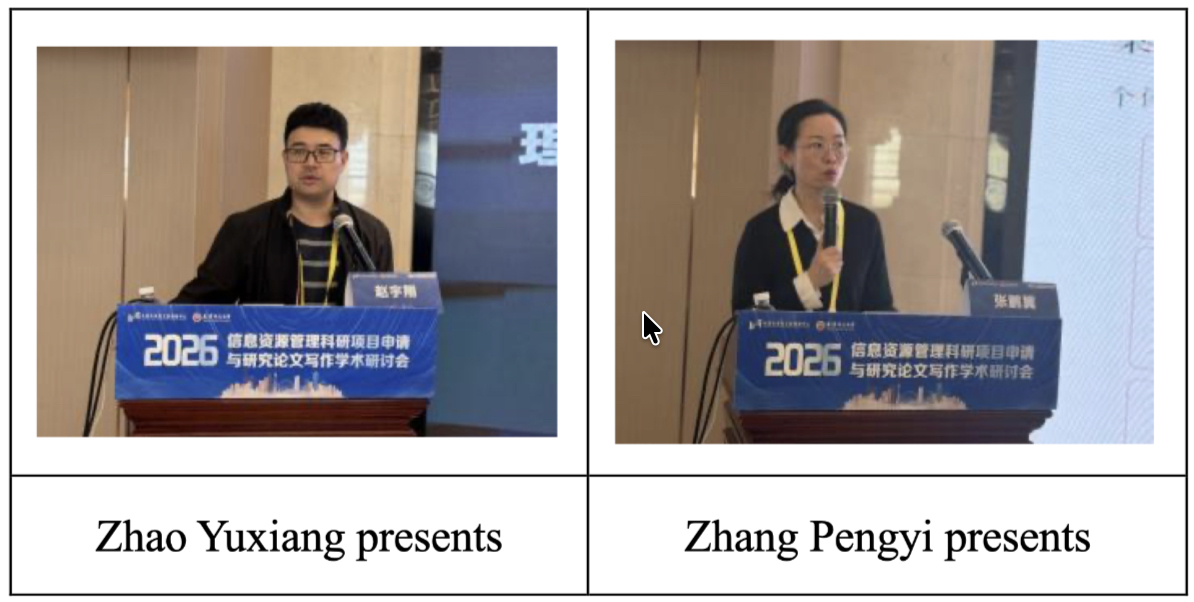
The afternoon session on March 22 was chaired by Associate Research Librarian Yi Fei, Deputy Editor-in-Chief of Library and Information Service. Professor Zhao Yuxiang from the School of Information Management, Nanjing University, delivered a presentation titled “Theoretical Hotspots and Frontier Tracking in Information Behavior Research.” He reviewed the core aspects, developmental stages, and theoretical frameworks of information behavior research, and offered an in-depth interpretation of six major frontier topics: meaning-making, embodied experience, cognitive authority, information practices, value co-creation, and community-driven dynamics.
Professor Zhang Pengyi from the Department of Information Management, Peking University, presented a report titled “Reference and Integration: Interdisciplinary Research Topics Selection and Writing in Information Resource Management.” She explained the necessity and feasibility of conducting interdisciplinary research in the field and discussed methods for interdisciplinary research design and academic writing, emphasizing that such research should be grounded in the core of the discipline and achieve mutual empowerment across fields.
The journal presentation session on the afternoon of March 22 was chaired by Wang Chuanqing, editor of LIS. Editors-in-chief and senior editors from 12 journals introduced their respective publications and editorial characteristics, including Library and Information Service (Deputy Editor-in-Chief Yi Fei), Knowledge Management Forum (Editor Wang Chuanqing), Data Analysis and Knowledge Discovery (Editorial Director Peng Xijun), Think Tank: Theory & Practice (Editorial Director Lü Qing), Chinese Journal of Scientific and Technical Periodicals (Editorial Director Liang Yongxia), Journal of Data and Information Science (Editorial Director Meng Ping), Data Intelligence (Editorial Director Liu Fenghong), Library and Information Research (Executive Editor-in-Chief Liu Guifeng), World Sci-Tech R&D (Editorial Director Tian Qianfei), Science Observation (Editorial Director Li Yuan), Modern Information (Editor Kong Jingyuan), and Digital Library Forum (Academic Editor Chang Chun). The presentations by journal editors enhanced participants’ understanding of each journal’s positioning, distinctive features, submission requirements, and peer review standards, thereby providing strategic guidance for targeted manuscript submission. Following the journal presentations, Yi Fei, Deputy Editor-in-Chief of Library and Information Service, introduced the manuscripts submitted by authors for this conference and invited experts and journal editors to provide comments. Participants engaged in face-to-face discussions with authors on topics such as research design, academic standards, and writing improvement, creating a highly interactive and dynamic atmosphere.
The 2026 Symposium on Research Project Applications and Scholarly Paper Writing in Information Resource Management concluded amid lively paper review and discussion sessions. The symposium not only provided strong support for participants to gain an in-depth understanding of research frontiers and academic writing methods in the field of information resource management, but also played a positive role in promoting academic exchange and deepening research collaboration. Participants widely noted that the symposium was rich in substantive content and highly rewarding, offering strong practical guidance for research project applications and academic writing. They expressed anticipation of future gatherings to continue advancing academic development together.
(Contributed by: Yin Cuinan, Cheng Jiasheng)
(Revised by: Yi Fei, Du Xingye)
(Finalized by: Chu Jingli)
Library and Information Service Editorial Office
March 30, 2026


