With the continuous evolution of digital and intelligent technologies, particularly artificial intelligence, Information Resource Management is undergoing a profound transformation—from a single discipline toward multidisciplinary integration, from established paradigms toward technology-driven paradigms, and from the humanities and social sciences toward New Liberal Arts. From the perspective of developing an independent knowledge system, there is an urgent need for closer coordination and innovative development between discipline building and academic publishing, so as to create a new ecosystem for Information Resource Management. Library and Information Service (LIS) is a major national academic journal serving the first-level discipline of “Information Resource Management.” Since its launch in August 1956, the journal has witnessed 70 years of the discipline’s development. Over the past seven decades, it has consistently adhered to its mission of “Integrating Theory with Practice, Promoting the Spirit of Scholarship, and Advancing the Development of the Profession.” It has remained committed to academic quality, strengthened scholarly communication, and promoted the transformation and development of Information Resource Management, earning a strong reputation and significant influence in both academic and professional communities.
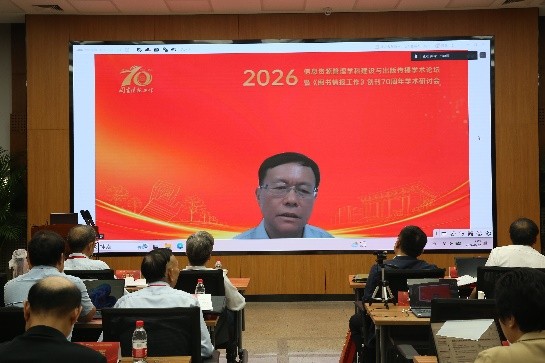
To mark the 70th anniversary of the founding of LIS, the National Science Library, Chinese Academy of Sciences (CASNSL), hosted the “2026 Academic Forum on Information Resource Management Discipline Development and Publishing Communication and Symposium Celebrating the 70th Anniversary of Library and Information Service” on August 22, 2026. The event was held in a hybrid format, with an online livestream and an in-person venue in Beijing. More than 60 discipline leaders from Information Resource Management departments, field experts, members of the LIS editorial board, peer reviewers, and readers were invited to participate in on-site discussions and exchanges on the integration of discipline development with publishing and scholarly communication in Information Resource Management. More than 450 scholars, researchers, practitioners, and master’s and doctoral students attended online, while over 1,000 additional viewers watched the livestream.
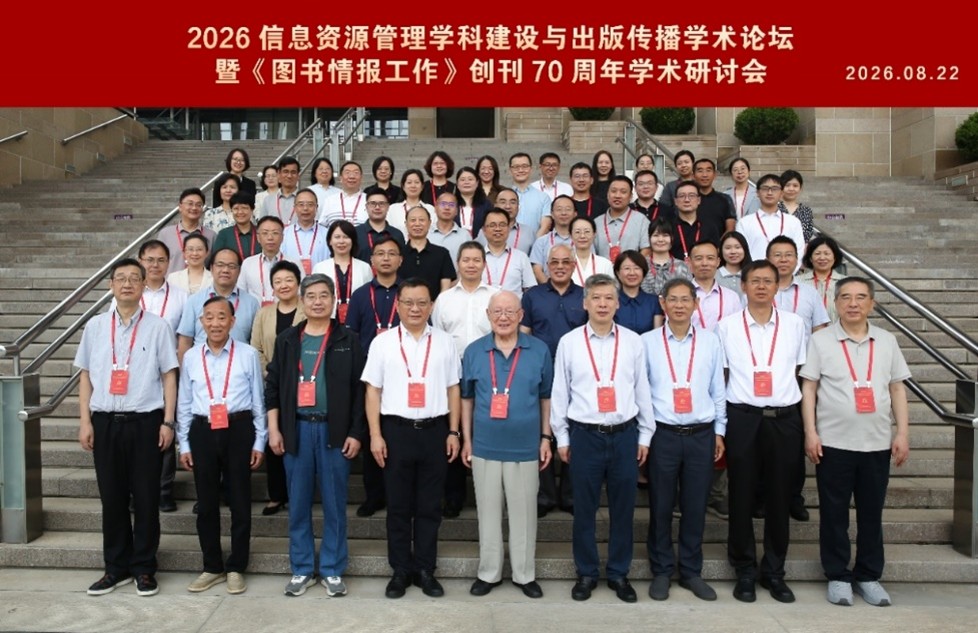
The on-site meeting was attended by Li Mengli, Secretary of the Party Committee of CASNSL; Researcher Qu Jiansheng, Director of CASNSL; Researcher Zhang Zhixiong, Deputy Director; Researcher Qian Li, Deputy Director; Meng Guangjun, the third editor-in-chief of LIS; Zhou Jinlong, the fourth editor-in-chief; Chu Jingli, the current editor-in-chief; Liu Xiwen, Chair of the LIS Editorial Board; as well as numerous editorial board members and members of the Young Editorial Board, including Qiu Junping, Yao Leye, Huang Shuiqing, Liu Bing, and Li Yuelin. Representatives of award recipients and peer journals also attended the event in person (Picture1).
|
|
|
Picture 1 Group photo of in-person attendees |
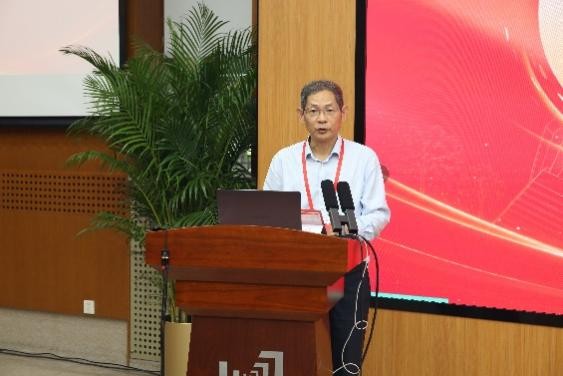
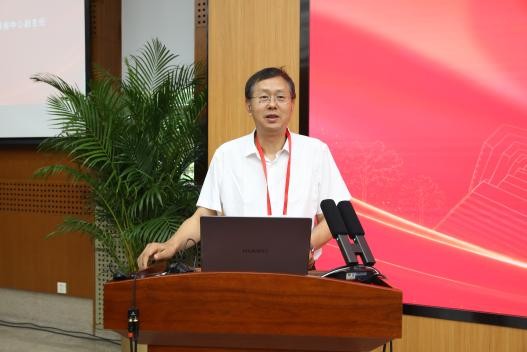
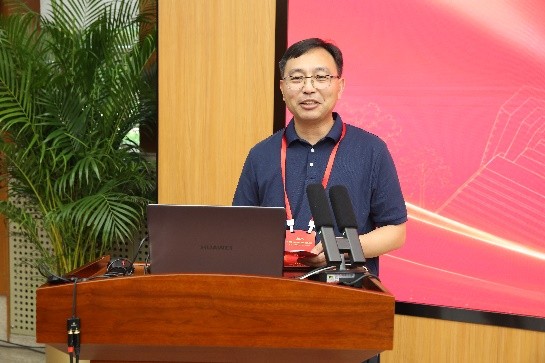
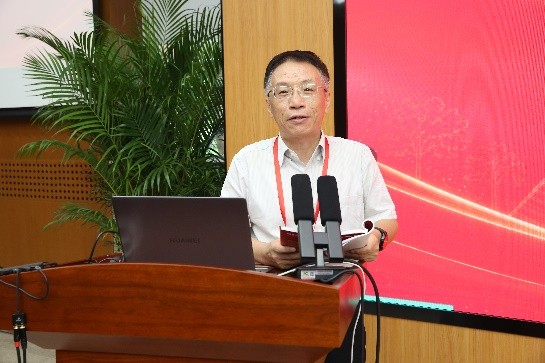
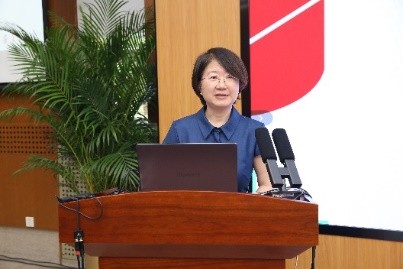
The opening ceremony was chaired by Researcher Liu Xiwen, Chair of the Editorial Board of LIS (Picture 2). Researcher Qu Jiansheng, Director of CASNSL; Chen Chuanfu, Senior Professor at Wuhan University; and Professor Sun Jianjun of Nanjing University delivered remarks.
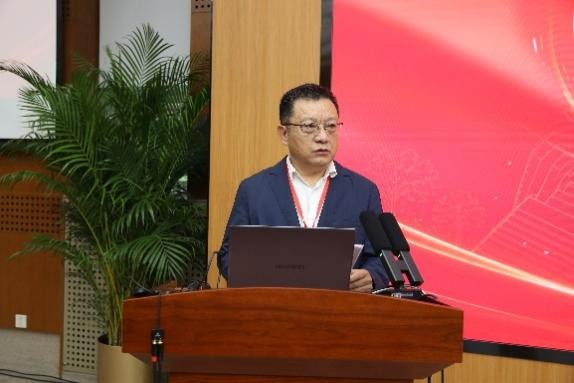
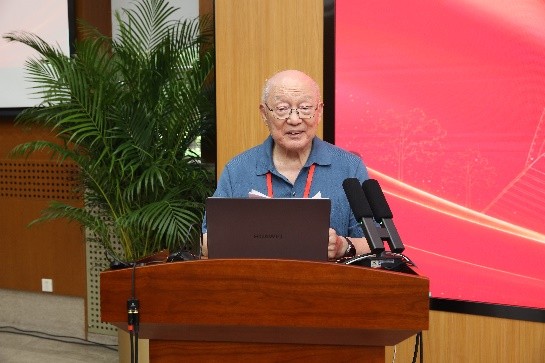
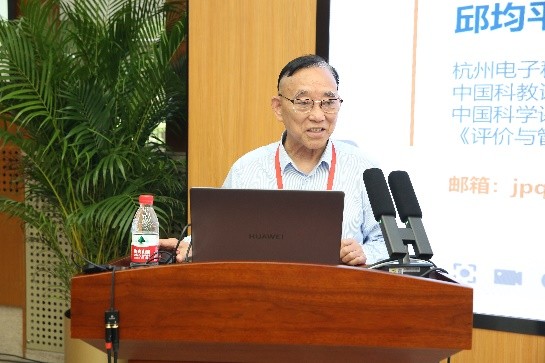
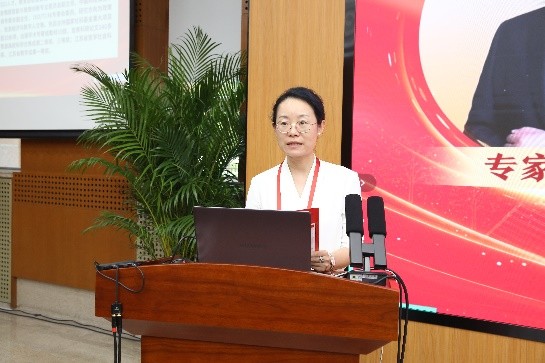
Director Qu Jiansheng delivered remarks on behalf of CASNSL, the host institution of LIS (Picture 3). He first extended his congratulations and respect on the occasion of the journal’s 70 years of development. He noted that 1956 was an extraordinary year. That year saw a number of major breakthroughs in the international scientific and technological community, while China formulated the 1956–1967 Long-Term Program for the Development of Science and Technology and launched a nationwide mobilization to “March Towards Science.” The establishment of a Scientific and Technical Information Service was identified as the 57th major scientific and technological task. It was against this backdrop that the Library of the Chinese Academy of Sciences took the lead in launching Bulletin of the Library of the Chinese Academy of Sciences in August 1956, the predecessor of today’s Library and Information Service. Director Qu described the initiative as a “groundbreaking layout.” The founding of the journal carried high hopes for supporting the development of the scientific and technical information system and advancing science and technology in the People’s Republic of China. This founding mission has also shaped the journal’s development over the decades. Successive generations of editors and editorial board members have remained committed to the journal’s original positioning and publishing mission, playing an important role as a national force in strengthening the foundations and advancing the systems of discipline development, professional capacity building, and talent cultivation in the field of library and information science. The topics covered in the journal’s articles have provided a profound reflection of the spiral trajectory of China’s library and information service sector—from active development to proactive reform, and then to innovative development. At the same time, the editorial team has actively embraced the challenges brought about by advances in information technology and changing demands for knowledge exchange. It has continuously innovated academic publishing and scholarly communication models, while further consolidating the journal’s leadership and influence in the field of Information Resource Management.
Director Qu noted that, amid the rapid development of artificial intelligence, CASNSL’s work in data resource development, information research, and knowledge dissemination will continue to advance in coordination with the journal. In the AI-driven transformation, CASNSL will continue to contribute to the development of China’s library and information service sector and to the construction of an independent knowledge system for the Information Resource Management discipline. Finally, on behalf of all colleagues at CASNSL, Director Qu expressed his appreciation to the successive editors-in-chief, editorial board members, editorial staff, and peer reviewers across China who have contributed to the journal’s development at different stages. He wished LIS continued success and new achievements as it embarks on a new chapter from this new starting point.
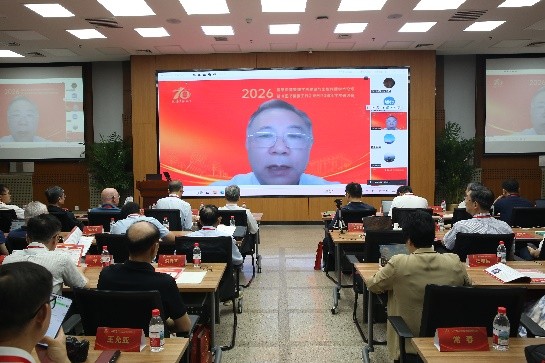
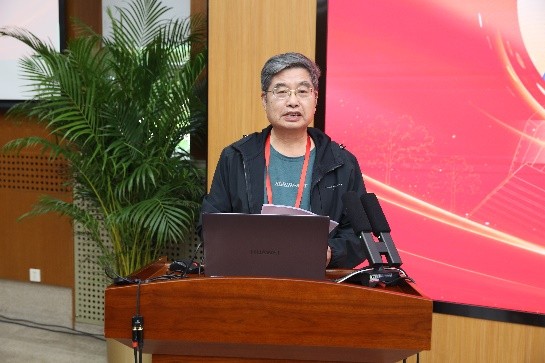
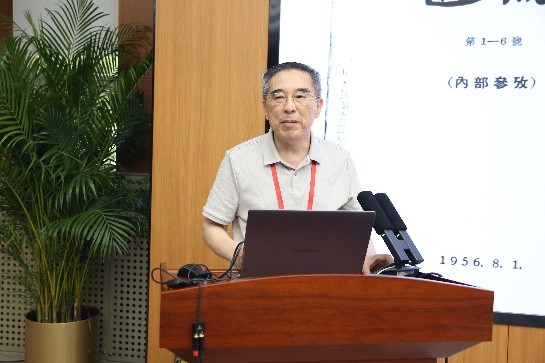
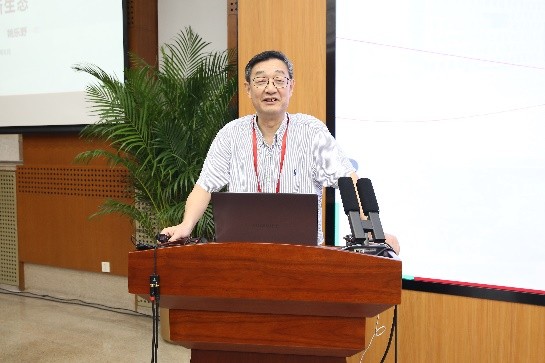
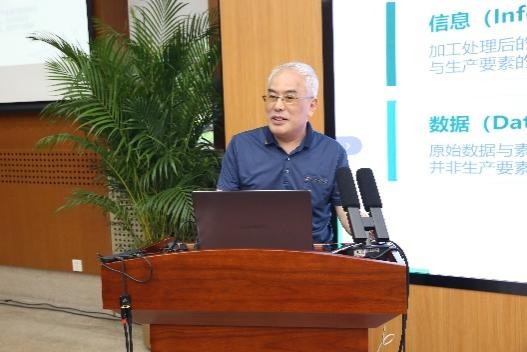
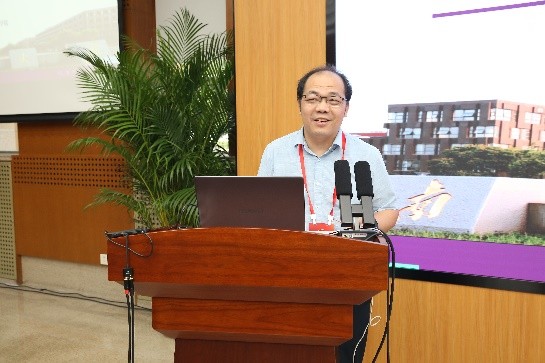
Professor Chen Chuanfu, Senior Professor at Wuhan University, former Convener of the Information Resource Management Discipline Evaluation Group of the Eighth Academic Degrees Committee of the State Council, and a senior editorial board member of LIS (Picture 4), first congratulated the journal on its 70th anniversary. He noted that the journal’s successive editors-in-chief had been founders and pioneers of library science theory in the People’s Republic of China and had made important contributions to the journal’s development. As both an editorial board member and a loyal reader of LIS, he said that he had followed the journal’s development closely over the years. The founding of LIS, Professor Chen observed, responded to the needs of its time and to the country’s major strategic needs in science and technology. The journal has kept pace with the times and led developments in the discipline, which he identified as its most important achievement. He highlighted several other major achievements of the journal. First, it has published numerous classic works, including Liu Guojun’s “What Is Library Science?”, which has remained a classic in library science education, research, and theoretical development, as well as essential reading for young scholars and researchers studying library science. Second, the journal has published many outstanding research achievements in the discipline, making important contributions to the development of disciplinary, academic, and discourse systems. Third, it has not only focused on traditional areas of library and information science, but also followed the latest developments in the discipline in the digital environment, continuously promoting the continuity and innovation of scholarship. Fourth, its columns and research topics have demonstrated a forward-looking perspective and distinctive academic vision, attracting a large number of outstanding authors to publish in the journal and helping to cultivate a substantial pool of talented researchers.
Finally, Professor Chen expressed his sincere expectations for LIS. He hoped that the journal would continue to forge ahead, uphold its original mission, lead innovation, and seize new opportunities while implementing General Secretary Xi Jinping’s important directives on developing an independent knowledge system in philosophy and social sciences. He called on the journal to make greater contributions to developing Chinese theories, contributing Chinese wisdom, and strengthening originality.
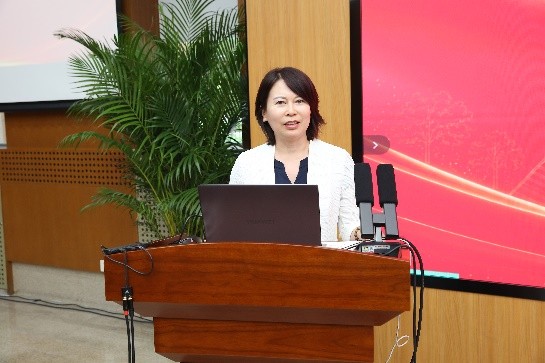
Professor Sun Jianjun of Nanjing University, former Convener of the Information Resource Management Discipline Evaluation Group of the Eighth Academic Degrees Committee of the State Council and a senior editorial board member of LIS (Picture 5), noted in his remarks that the journal’s 70-year development is itself a microcosm of the development of China’s library and information service sector since the founding of the People’s Republic of China. The journal has consistently adhered to its publishing mission. From bibliometrics and selective information services in the era of small data, to correlation analysis and data governance in the era of big data, and now to an in-depth examination of AI for Science and human–AI systems in the current AI environment, the journal’s content clearly traces the discipline’s evolution from document management to information and intelligent services.
Professor Sun provided an in-depth interpretation of the transformation trends and mission of the Information Resource Management discipline and its relationship with journal publishing. He noted that the discipline is currently undergoing the most profound transformation in its history. On the one hand, its disciplinary scope is being fundamentally reshaped and is expanding into broader areas such as data resource management, knowledge discovery, and intelligent disciplines. On the other hand, the disciplinary ecosystem is also undergoing dramatic changes. First, modernization of national governance, the digital economy, and national self-reliance and self-strengthening in science and technology have generated unprecedented strategic demands for the discipline. Second, the discipline is shifting toward a new paradigm of knowledge production driven by artificial intelligence. Third, it is becoming increasingly integrated with computer science, management, law, sociology, and other fields. The year 2026 marks the 10th anniversary of General Secretary Xi Jinping’s important speech on “accelerating the development of philosophy and social sciences with Chinese characteristics.” Against this backdrop, China’s Information Resource Management discipline must accelerate the development of an independent knowledge system. China has the world’s largest population of information users, the richest range of digital application scenarios, and the most extensive public cultural service network. These distinctive Chinese contexts provide fertile ground for developing locally grounded theories and original paradigms. Academic publishing is a key component of knowledge-system development. In the face of profound transformation, academic journals should be more than platforms for publishing papers. They should also serve as “navigators” of academic directions, “catalysts” for academic innovation, and “construction ground” of independent knowledge systems. Journals should take the initiative to engage with the research frontier, guide research directions through strategic topic planning, actively organize academic debate, transform information service capabilities into intellectual momentum supporting national strategies, promote the incorporation of China’s practical achievements into the core disciplinary system, and enhance academic visibility and discursive influence.
|
|
|
|
Picture 2 Researcher Liu Xiwen chairing the session |
Picture 3 Director Qu Jiansheng delivering opening remarks |
|
|
|
|
Picture 4 Professor Chen Chuanfu delivering opening remarks |
Picture 5 Professor Sun Jianjun delivering opening remarks |
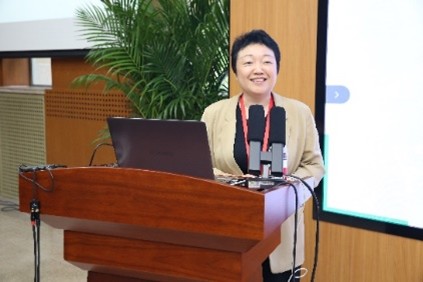
The session featuring remarks by former editors-in-chief and a presentation by the current editor-in-chief was chaired by Researcher Zhang Zhixiong, Deputy Director of CASNSL (Picture 6). Meng Guangjun, the third editor-in-chief of LIS, and Zhou Jinlong, the journal’s fourth editor-in-chief, delivered remarks, followed by a presentation from Professor Chu Jingli, the current editor-in-chief.
Professor Meng Guangjun, the third editor-in-chief of LIS (Picture 7), systematically reviewed the journal’s development since its founding, recalling its history in detail. When it was launched in 1956, the journal was titled Bulletin of the Library of the Chinese Academy of Sciences, making it the earliest library science journal established in the discipline in the People’s Republic of China. In 1961, it was renamed Reference Materials for Library Work; in 1975, it resumed publication under the title Library Work; and in 1980, it was renamed Library and Information Service. Each transformation corresponded to an expansion of the discipline’s boundaries and a response to the needs of the times. After 70 years of dedicated work and the sustained efforts of several generations, the journal has grown into a renowned and well-established brand with a rich legacy. Its history is one of continuously identifying, accumulating, processing, and disseminating outstanding theoretical and practical innovations in library and information science; systematically promoting the achievements of China’s library and information services and the substantial progress made in discipline development; and discovering, cultivating, and promoting a large number of outstanding scholars and professionals in China’s library and information field.
Professor Meng then movingly recalled his 46-year association with LIS, from being a reader and author to serving as an editor and eventually as editor-in-chief. He expressed particular gratitude for the trust placed in him by successive leaders, especially Director Shi Jian, who made an exceptional decision to appoint him as Editor-in-Chief. He also thanked his colleagues in the editorial office for their solidarity and collaboration, noting that together with Xin Ximeng, Zhou Jinlong, and others, they built a journal widely recognized by the academic community as an outstanding publication. He further expressed gratitude for the support of scholars such as Peng Feizhang, Ma Feicheng, and Chen Chuanfu, as well as that of peer journals. Professor Meng concluded: “Library and Information Service and I have witnessed each other’s growth. Together, we have integrated the philosophical thinking, professional theories, practical applications, and technical methods of the discipline, and together we have brought learning, reading, research, editing, writing, and teaching into close integration.” He also recalled that, because he had spent most of his life working with books and journals—including during holidays, at night, while traveling, and even in a hospital bed—his family often joked that books and journals were his “true love.” Behind this light-hearted remark lies Professor Meng’s lifelong dedication to scholarship and his rigorous and conscientious approach to editorial work. Looking ahead to new developments such as artificial intelligence and digital humanities, he noted that the journal should work closely with institutions, professional services, and the discipline of Information Resource Management, uphold its fundamental values, and strive to achieve new successes, with the goal of building LIS into a century-old academic brand and an intelligent journal.
Research Librarian Zhou Jinlong, the fourth editor-in-chief and the first president of LIS Press, spoke about reforms in journal publishing, the development of the author community, and the journal’s development experience (Picture 8). He summarized his experience in running the journal in six areas. First, stable support from the supervising and sponsoring institutions. The journal relies on the Chinese Academy of Sciences and its National Science Library, receiving sustained support in strategic decision-making, staffing, and infrastructure. Second, the role of the editorial board and its members. The journal has placed strong emphasis on editorial board development, with editorial board members playing a key role in assessing disciplinary frontiers, planning special topics, conducting peer review, and making decisions on manuscripts. Third, cultivating and maintaining the author community. Authors provide original ideas and data and constitute the foundation of a journal’s survival. The editorial office optimized its service processes, shortened review and publication cycles, established an academic publishing fund, and developed regular communication mechanisms, thereby consolidating its author community and ensuring both the quality and quantity of submissions. Fourth, the academic expertise and organizational capabilities of the Editors-in-Chief. The editor-in-chief’s academic vision, professional competence, and overall coordination skills directly affect whether a journal can keep pace with the times and pursue reform and innovation. Successive editors-in-chief have responded proactively to changing circumstances, pioneered a number of initiatives in the field, and built a strong academic reputation. Fifth, the craftsmanship of editorial staff. Generations of editors have adhered to rigorous and objective professional standards, carefully managed every stage of editing and proofreading, upheld academic standards, and worked diligently. Their efforts have ensured the overall quality of the publication and earned widespread recognition from the professional community. Sixth, the team culture and working style of the editorial office. The editorial office has fostered a working environment characterized by teamwork, pragmatism, efficiency, and dedication. It has received recognition as an outstanding collective on multiple occasions, providing a solid foundation for the journal’s stable development. President Zhou also reviewed the journal’s development following the establishment of its publishing house in 1993. Under a market-oriented operating model, both its social and economic benefits continued to grow, demonstrating the positive role that institutional reform can play in advancing journal development. Looking to the future, President Zhou recommended incorporating the goal of “building a century-old flagship academic journal” into the journal’s medium- and long-term strategic plan. He emphasized that achieving high-quality and sustainable development would require the sustained efforts of successive generations of journal professionals.
Professor Chu Jingli, the current Editor-in-Chief of LIS, delivered a presentation entitled “Living Up to Expectations and Forging Ahead: Reflections on the 70th Anniversary of Library and Information Service” (Picture 9). From the perspective of the Editor-in-Chief, he summarized the journal’s development through 12 “mosts”:
These 12 “mosts” reflect the Editor-in-Chief’s profound “love” for the journal, as well as his firm conviction and determination to build LIS into an academically influential journal characterized by a strong sense of responsibility and a human touch.
|
|
|
|
Picture 6 Deputy Director Zhang Zhixiong hosting the session |
Picture 7 Former Editor-in-Chief Meng Guangjun delivering remarks |
|
|
|
|
Picture 8 Former Editor-in-Chief Zhou Jinlong delivering remarks |
Picture 9 Current Editor-in-Chief Chu Jingli delivering a presentation |
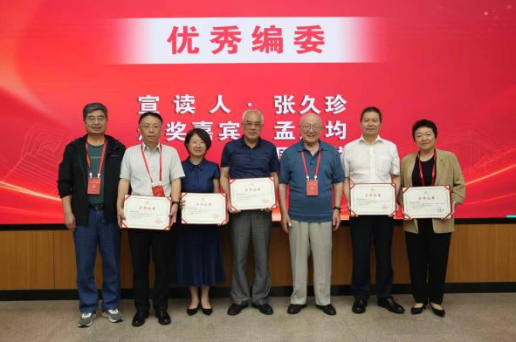
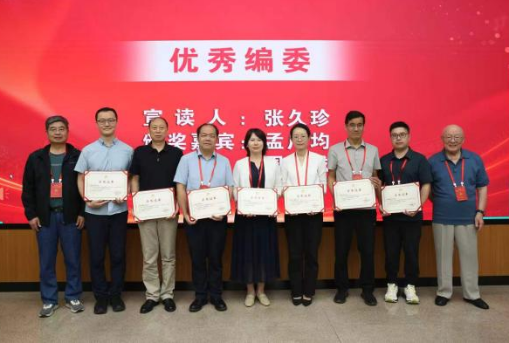
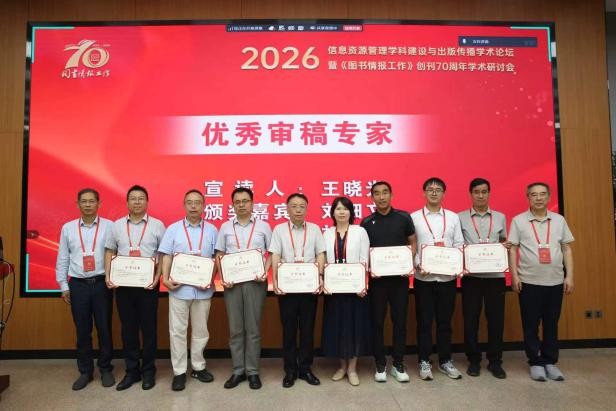
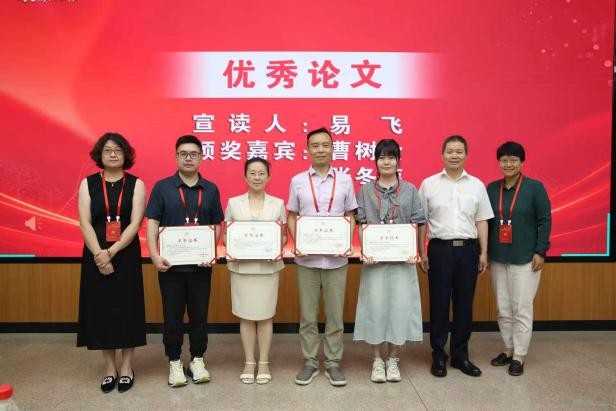
The high-quality development of LIS over the past 70 years would not have been possible without the support of leaders at all levels of its supervising and sponsoring institutions, the contributions of successive teams of editorial board members, the efforts of peer reviewers in selecting high-quality manuscripts for the journal, and, above all, the broad community of authors and readers. To mark the 70th anniversary of the founding of LIS, the journal’s editorial office specially selected 20 Outstanding Editorial Board Members (2016–2025), 50 Outstanding Peer Reviewers (2016–2025), and 20 Outstanding Papers (2016–2025). Honorary certificates were presented at the event as a token of appreciation and encouragement. The award ceremony was chaired by Research Librarian Du Xingye, Director of the Editorial Office of LIS. Deputy Editors-in-Chief Zhang Jiuzhen, Wang Xiaoguang, and Yi Fei respectively announced the names of the award-winning editorial board members, peer reviewers, and outstanding papers and their authors. Meng Guangjun, the journal’s third Editor-in-Chief, and Zhou Jinlong, the fourth Editor-in-Chief, presented awards to the Outstanding Editorial Board Members (Pictures 10–11). Liu Xiwen, Chair of the Editorial Board, and Chu Jingli, Editor-in-Chief, presented awards to the Outstanding Peer Reviewers (Picture 12). Cao Shujin, editorial board member of LIS; Zhang Dongrong, Director of the Graduate Education Office of CASNSL; and Li Yuan, Director of the Editorial and Publishing Department, presented awards to the authors of the Outstanding Papers (Picture 13).
|
|
|
|
Picture 10 Awards presented to Outstanding Editorial Board Members (1) |
Picture 11 Awards presented to Outstanding Editorial Board Members (2) |
|
|
|
|
Picture 12 Awards presented to Outstanding Peer Reviewers |
Picture 13 Awards presented to authors of Outstanding Papers |
The first and second sessions of invited expert presentations were chaired by Researcher Qian Li, Deputy Director of CASNSL and a member of the Youth Editorial Board of LIS (Picture 14). Qiu Junping, Senior Professor at Hangzhou Dianzi University and a senior editorial board member of LIS, delivered a presentation entitled Upholding the Fundamentals, Practicing with Dedication and Relaying the Torch of Legacy: A Bibliometric Analysis of Articles and Citations in LIS over the Past Decade (Picture 15). Using research articles published in LIS from 2016 to 2025 as the sample, Professor Qiu conducted a bibliometric analysis of the journal’s publications and citations. The analysis showed that LIS has developed a stable, cross-institutional, and multi-centered author ecosystem. Research teams have developed in parallel rather than being concentrated in a single research institution, while cross-institutional collaboration has become an important organizational form for research output. In terms of the evolution of research topics, LIS has demonstrated a balance between maintaining its established strengths and pursuing innovation. Traditional research directions have strengthened the disciplinary foundation, while emerging topics have continuously expanded the boundaries of disciplinary knowledge, resulting in an organic combination of scholarly continuity and innovative development. In terms of academic impact, the journal’s long-term accumulation and the speed of dissemination have strengthened simultaneously, creating a dual model of academic influence characterized by “stable accumulation + rapid dissemination.” Multiple citation indicators, including the composite impact factor, have shown a sustained upward trend.
Professor Qiu summarized the structural changes in LIS over the past decade in four respects. First, networking among authors: the clustering effect of core authors has become increasingly evident, and cross-institutional, multi-centered collaboration networks have largely taken shape. Second, diversification of topics: traditional research areas have continued to deepen, while new topics have emerged continuously. Third, more immediate dissemination: the journal’s twice-monthly publication schedule has effectively shortened the time lag between publication and citation, significantly improving the efficiency of knowledge dissemination. Fourth, the journal’s growing role as a hub: as an academic bridge, the journal brings together the academic community and connects academic research with professional practice. In some fields, pioneering research findings have been published in the journal at an early stage, enabling it to play a leading role in shaping research agendas.
Finally, Professor Qiu offered four recommendations for the journal’s future development: first, uphold its fundamentals by maintaining a commitment to scholarship and consolidating the professional foundation of the discipline; second, pursue innovation by identifying frontier issues with greater sensitivity and continuously expanding methodological approaches; third, remain open by enhancing international academic visibility and expanding the space for knowledge dissemination; and fourth, serve the public by aligning with national strategic needs and promoting the development of the discipline and professional practice. Professor Qiu also expressed the hope that the journal would continue to strengthen its role as an academic stronghold, intellectual platform, and knowledge hub, and achieve higher-quality development toward the goal of becoming a century-old flagship academic journal.
Professor Xia Lixin, Secretary of the Party Committee of Central China Normal University and an editorial board member of LIS, delivered an online presentation entitled Core Tasks and Deepening Pathways for Theoretical Innovation in the Independent Knowledge System of China’s Information Resource Management Discipline. His presentation examined the topic from four dimensions: the practical basis, key areas for breakthrough, framework for restructuring the system, and pathways for implementation. Professor Xia attributed the drivers of theoretical innovation to three forms of logic. The contemporary context is characterized by external drivers such as the strategic deployment to develop an independent knowledge system, the establishment of relevant alliances, and the demands arising from digital transformation. The historical logic shows that the discipline has progressed through initial formation, localization, and integrated development, and has now entered a period of independent innovation. The establishment of Information Resource Management as a first-level discipline has expanded its boundaries while creating new demands for disciplinary restructuring. The practical logic reveals current problems including fragmented concepts, insufficient explanation of fundamental principles, inadequate integration with practice, and insufficient integration of the overall disciplinary system. The long-standing research approach centered primarily on the introduction and verification of external theories urgently needs to be overcome.
Professor Xia argued that the core tasks of theoretical innovation should focus on the localized reconstruction of concepts, principles, and research paradigms. At the conceptual level, the discipline should draw on Chinese practice to develop a distinctive genealogy of key concepts. At the level of principles, it should focus on the entire life cycle of information resources and distill the locally grounded operational principles governing each stage. At the level of research paradigms, it should closely align with the development of Digital China, develop distinctive paradigms driven by digital integration, and promote multidisciplinary integration. He further noted that the overall restructuring of the theoretical system should follow three pathways: greater independence, greater coordination, and greater leadership. He emphasized the need to firmly anchor disciplinary development in the two foundations of “China” and “Independence”, and to advance in a coordinated manner through the construction of conceptual genealogies, the distillation of locally grounded principles, the cultivation of distinctive research paradigms, and the integration of the theoretical system.
Finally, Professor Xia noted that, after 70 years of development, LIS has become more than a vehicle for publishing research papers. It is also an important platform for knowledge innovation and scholarly exchange, carrying the academic responsibility of documenting disciplinary shifts and responding to the questions posed by the times. He expressed the hope that the journal would continue to play a leading role at the research frontier and make sustained scholarly contributions to the development of an independent knowledge system for the discipline.
|
|
|
|
Picture 14 Deputy Director Qian Lihosting the session |
Picture 15 Professor Qiu Junping delivering a presentation |
The third and fourth sessions of invited expert presentations were chaired online by Professor Li Guangjian of the Department of Information Management at Peking University and Deputy Chair of the Editorial Board of LIS. Professor Lu Wei, Vice President of Wuhan University and Deputy Chair of the Editorial Board of LIS, delivered an online presentation entitled “Large Model-Driven Journal Compliance Review and Risk Governance.” Focusing on the use of large models in journal compliance review, Professor Lu noted that scientific and technological innovation, evaluation, and governance have become increasingly important and are shifting toward an orientation centered on innovation capacity, quality, effectiveness, and contribution. In this process, research ethics and governance have become particularly important. Large models are reshaping the way scientific knowledge is produced, with AI entering the entire research lifecycle. At the same time, they have introduced a series of new challenges, including how to ensure quality, identify AI-generated content, evaluate innovative contributions, and define responsibility. Emerging challenges associated with AI-assisted research, such as AI-generated false content, have made innovation governance and evaluation more complex. Traditional research governance mechanisms are unable to achieve comprehensive monitoring throughout the entire process, making it necessary to develop intelligent detection, trustworthy evaluation, and collaborative governance based on human–AI collaboration. Although academic journals have long established comprehensive editorial procedures, such as the “three-stage review and three-stage proofreading” system, problems can still arise during implementation. Relying solely on human judgment in reviewing and proofreading research outputs in an AI-driven environment is no longer sufficient to identify and screen out all potential risks. Large models can assist human reviewers by conducting preliminary evidence screening, checking compliance, ensuring process reliability, and supporting early risk assessment, thereby reducing potential risks. Finally, Professor Lu introduced the main functions and applications of a paper compliance review platform independently developed by his team. The system can help journals achieve human–AI collaborative quality control, intelligently identify risk factors, and ultimately facilitate trustworthy evaluation and collaborative governance.
Yao Leye, Professor at the School of Public Administration, Sichuan University, and an editorial board member of LIS, delivered a presentation entitled “Building a New Ecosystem for Information Resource Management Disciplinary Communication through Human–AI Collaboration” (Picture 16). Drawing on the development of AI technology and the social experiment “AI as First Author” conducted by East China Normal University, Professor Yao noted that artificial intelligence has risen to the level of a national strategic priority and is deeply penetrating the entire process of scientific knowledge production, dissemination, and utilization. This is transforming disciplinary communication from a linear model into a networked ecosystem based on human–AI collaboration, while also giving rise to a range of ethical challenges involving stakeholder responsibility, knowledge credibility, intellectual property, algorithmic fairness, and a series of other issues. At the same time, generative artificial intelligence has moved beyond the boundaries of traditional information-processing tools, acquiring comprehensive capabilities in knowledge understanding, knowledge organization, knowledge generation, and intelligent interaction. It has therefore created opportunities to reshape the ecosystem of disciplinary communication, while providing the necessary technological conditions, theoretical foundations, and practical impetus for such transformation.
Building on this foundation, Professor Yao developed a framework for a human–AI collaborative ecosystem for Information Resource Management disciplinary communication, together with an operational support system. The human–AI collaborative disciplinary communication ecosystem is a dynamically evolving system centered on the processes of producing, evaluating, organizing, disseminating, and utilizing disciplinary knowledge. It is jointly developed and governed by multiple stakeholders, including journal publishers, peer reviewers, knowledge service institutions, AI systems and tools, and the general public. Its core logic follows a pathway of cognitive collaboration - model innovation - mutual value creation. The operational support system provides the foundation for the sustained, stable operation and healthy evolution of this new human–AI collaborative ecosystem for disciplinary communication. It encompasses four areas: disciplinary knowledge infrastructure; institutional standards and regulations governing AI participation in disciplinary communication; pilot projects in representative application scenarios and iterative development of collaborative models; and continuous monitoring and dynamic evaluation mechanisms. Together, these components can provide a solid foundation for the creation, dissemination, utilization, and realization of the value of disciplinary knowledge.
|
|
|
Picture 16 Professor Yao Leye delivering a presentation |
The fifth and sixth sessions of invited expert presentations were chaired by Professor Liu Bing, Dean of the School of Management at Tianjin Normal University and an editorial board member of LIS (Picture 17). Professor Ke Ping of the School of Information and Communication at Nankai University and an editorial board member of LIS delivered an online presentation entitled “The Current Status and Future of Building an Independent Knowledge System for Library Science.” He systematically reviewed the historical evolution of the independent knowledge system of library science. Professor Ke pointed out that practical experience in book collection had already emerged in the pre-Qin period, while the Han dynasties saw its initial systematization. During the Sui dynasty, Niu Hong’s Memorial Requesting the Opening of Channels for the Submission of Books (Qing Kai Xian Shu Zhi Lu Biao) represented a theoretical advancement, followed by continued development from the Song and Ming dynasties through the Qing dynasty, with works such as Stories of the Imperial Library (Lintai Gushi) and Essentials of Book Collecting (Cangshu Jiyao) as representative texts. Systematic syntheses by scholars such as Xie Zhuohua and other pioneering academics further confirmed that China had developed a comprehensive system of library science thought and practice since ancient times.
In the modern period, Western library science was introduced into China, and the academic community pursued a parallel path of drawing on foreign scholarship and adapting it to local contexts. Modern scholars inherited traditional Chinese ideas on book collection while independently exploring terminology translation, professional standards, and professional education. For example, Liang Qichao advocated the development of library science in China, while the Wenhua School of Library Science advanced professional education. Together, these efforts contributed to the gradual formation of an independent knowledge system. Following the founding of the People’s Republic of China, the independent knowledge system of library science was formally established. Supported by policies and regulations such as the National Book Coordination Plan, the Outline for Reporting on Library Work, and the Public Library Law of the People’s Republic of China, and guided by Marxist theory, Chinese scholars proposed indigenous theories such as the element theory, contradiction theory, and law theory, thereby developing a theoretical and methodological system suited to China’s national conditions.
The establishment of Information Resource Management as a first-level discipline has provided a new institutional framework for developing an independent knowledge system for library science. Professor Ke also reviewed the pioneering contributions of scholars including Meng Guangjun, Peng Feizhang, and Ma Feicheng, as well as his own participation in related research, with many of these studies published in LIS. Finally, he introduced the latest research progress of the Nankai University team and called for collaborative efforts across the academic community to continuously improve a disciplinary theoretical system rooted in Chinese practice.
Professor Huang Shuiqing of the School of Information Management at Nanjing Agricultural University and an editorial board member of LIS delivered a presentation entitled “The Full-Link DIKW Model and Data Value Realization: Data Resources · Data Intelligence · Data Factors” (Picture 18). He noted that LIS, rooted in the first-level discipline of Information Resource Management and committed to supporting the development of young scholars over the long term, serves as an important academic platform for disciplinary development. He then proposed a “full-link DIKW model” for transforming and realizing data value in the digital and intelligent era. Professor Huang pointed out that the traditional DIKW model has difficulty explaining the complex mechanisms through which data value is realized under conditions of cross-actor data circulation and deep AI involvement. The realization of data value can be divided into three stages. The first stage is data resourcing, in which raw records are transformed into resources that support business operations. The second stage is data intelligence, which represents a transition from assisted analysis to data- and intelligence-driven decision-making. The third stage is data factorization, in which data moves beyond a single actor and enters cross-actor circulation, enabling both providers and recipients to derive value and ultimately benefiting society as a whole. Artificial intelligence runs throughout all three stages of data value realization: it improves processing efficiency during data resourcing, drives the upgrading of decision-making during the data intelligence stage, and amplifies the multiplier effect generated by the combination of data and application scenarios during the circulation of data factors.
Based on these observations, Professor Huang reconstructed and extended the DIKW model into the full-link DIKW model. While retaining the linear cognitive pathway of the traditional DIKW model, the full-link DIKW model breaks new ground in three respects. In terms of structure, it shifts from a linear pyramid to a dynamic, full-link, networked system with multiple feedback loops. In terms of scope, it expands from individual cognition to a multi-actor data ecosystem. In terms of content, it incorporates data factors, addressing the limitations of the original model, which focuses primarily on internal operations within a single entity and lacks an outlet for the social value of data. As a result, its applicability extends to diverse areas of the economy and society. Grounded in China’s strategic needs concerning data factors, the new model clearly defines the functional boundaries and evolutionary logic of data resources - data intelligence - data factors, revealing the pathway through which data evolves from an internal asset into a factor of social production. It provides a new basic analytical framework for theoretical development in Information Resource Management and for practical applications involving data factors.
|
|
|
|
Picture 17 Professor Liu Bing hosting the session |
Picture 18 Professor Huang Shuiqing delivering a presentation |
The seventh and eighth sessions of invited expert presentations were chaired online by Professor Cao Gaohui, Dean of the School of Information Management at Central China Normal University and Chair of the Youth Editorial Board of LIS. Professor Zhang Jiuzhen, Director of the Department of Information Management at Peking University and Deputy Editor-in-Chief of LIS, delivered an online presentation entitled “The Path toward the Integrated Development of Library, Information, and Archives Disciplines.” Drawing on university admissions practices, she addressed pressing issues such as how to enhance the visibility and competitiveness of the discipline amid the renaming of the first-level discipline and broader disciplinary transformation, and proposed four pathways for promoting the integration of the library, information, and archives disciplines and the development of Information Resource Management.
First, the discipline should capitalize on its integration of the humanities and sciences, strengthen external communication, and tell its story effectively. Professor Zhang noted frankly that every admissions season, she receives numerous inquiries from prospective students and parents, many of whom do not understand the content or value of the discipline. It is therefore necessary to explain to the public that libraries are not merely cultural institutions for preserving human knowledge, but also “data oil fields” that apply technological methods to organize and activate knowledge. In the age of artificial intelligence, library science should not only make knowledge readable by humans, but also enable machines to “understand” knowledge—precisely the focus of emerging fields such as digital humanities. She also shared Peking University’s 2026 admissions data, demonstrating that when the discipline’s story is communicated effectively, a field integrating the humanities and sciences can indeed attract outstanding students. Second, laboratory development should be strengthened. Taking the recently established Laboratory for Artificial Intelligence Governance and Development whose establishment she led, as an example, Professor Zhang argued that the library, information, and archives disciplines have a responsibility to contribute their expertise to AI governance and development. The laboratory aims to engage with the social application of artificial intelligence at the levels of rules, standards, and values, rather than focusing solely on technological research and development. Third, organized research should be strengthened to break the habit of “working in isolation.” In the AI era, questions such as how to organize knowledge and information more effectively, how to discover and access knowledge and information fairly, how to identify and prevent plagiarism in academic writing, and how to improve AI literacy are increasingly difficult for individuals to address alone. They require like-minded researchers to work together toward common goals. Fourth, interdisciplinary collaboration should be strengthened to demonstrate the value of the discipline in real-world settings. Professor Zhang emphasized that a discipline can remain vibrant only if it is willing to collaborate with researchers from other fields. While maintaining its intellectual core and essential character, the discipline can collaborate with other fields and draw on their methods, tools, and forms of presentation. She cited Peking University’s research and application cases in information integration for disaster prevention and mitigation, the development of data platforms for the humanities and social sciences, the development of data collections, the training of data service professionals, and documentary information-based think tank services. These examples demonstrate that Information Resource Management faces strong and growing social demand, providing a new arena in which the discipline can apply its expertise and demonstrate its value.
Professor Wang Xiaoguang, Dean of the School of Information Management at Wuhan University and Deputy Editor-in-Chief of LIS, delivered an online presentation entitled “Data Practices and Value Realization in the Digital Humanities.” He pointed out that, as a fundamental research activity in the digital humanities, data practice urgently requires systematic review and critical reflection against the backdrop of the rapid iteration of generative artificial intelligence. Professor Wang reviewed the early understanding of “data” in the digital humanities and noted that the field has been deeply intertwined with data work since its emergence. With its dual characteristics of technology and the humanities, Information Resource Management occupies an important position in domestic digital humanities research. Generative AI has driven the rapid development of multimodal and spatial intelligence technologies, promoting transformations in digital humanities infrastructure and research paradigms. At the same time, it has exposed significant limitations. For example, large models remain limited in their ability to understand the aesthetic conception and historical context of traditional cultural works such as classical Chinese poetry. Building fine-grained, high-quality datasets of China’s outstanding traditional culture and establishing an iterative mechanism through which data and models reinforce each other have therefore become important tasks for the discipline.
Professor Wang summarized the characteristics of humanities data practices as follows: their value objectives focus on long-term preservation, dissemination, and sharing; research is conducted primarily through collaboration among humanities scholars; data sources mainly include libraries, archives, and museums; and the data are characterized by semantic ambiguity, heterogeneity, and fragmentation. He categorized humanities data practices into four types—data collection, processing, presentation, and sharing—and proposed three pathways for value realization: transformation, enhancement, and activation, corresponding respectively to modality conversion, semantic enhancement, and multimodal integration. Professor Wang also reflected on the engineering-oriented development of humanities data practices. Finally, drawing on Plato’s myth about the origin of writing, he offered a philosophical reflection, arguing that AI can efficiently generate symbolic content, but it is necessary to distinguish between the surface-level information contained in its outputs and the deeper wisdom generated by human beings. Looking to the future, the research object of Information Resource Management is extending beyond carrier-based symbols to encompass wisdom itself.
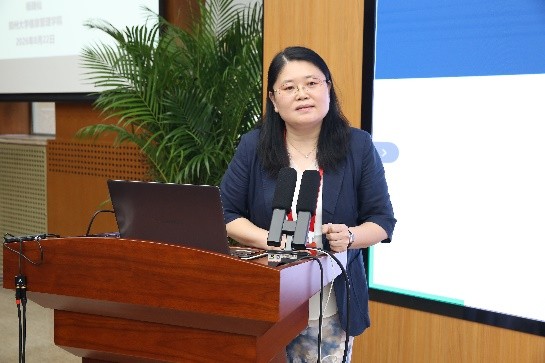
The ninth and tenth sessions of invited expert presentations were chaired online by Professor Yan Hui, Party Secretary and Deputy Dean of the School of Information Resource Management at Renmin University of China and Deputy Chair of the Youth Editorial Board of LIS (Picture 19). Professor Li Yuelin, Dean of the School of Information and Communication at Nankai University and an editorial board member of LIS, delivered a presentation entitled “Research on Users’ Information-Seeking Dilemmas in Unconventional Information Environments” (Picture 20). Focusing on user behavior in unconventional information environments created by emergencies, she shared a series of findings from a major project funded by the National Social Science Fund of China under her leadership, as well as the outcomes of her team’s continued research on information behavior.
Using Taylor’s concept of the “information use environment” as her theoretical framework, Professor Li employed a mixed-methods approach combining in-depth interviews, large-scale questionnaire surveys, and multiple case studies to systematically investigate information use in the context of emergencies such as the COVID-19 pandemic and natural disasters. The research identified seven dilemmas faced by the public when using crisis information:
In response to these dilemmas, Professor Li proposed several pathways for improvement, including diversifying information content and adapting it dynamically; strengthening communication channels and interaction between government and the public; and enhancing the empowering capacity of information, so that information is not merely released but is also understandable and useful to the public. These proposals provide important insights for improving crisis information governance and better meeting public information needs.
Professor Liu Yuenan, Dean of the School of Information Resource Management at Renmin University of China and an editorial board member of LIS, delivered a presentation entitled “The Archival Profession in the 15th Five-Year Plan: Key Issues, Functional Positioning, and Future Prospects” (Picture 21). She conducted an in-depth examination of the arrangements for the archival profession in the 15th Five-Year Plan and, from the perspective of archival studies, addressed the need to build an independent knowledge system for the discipline. Through a content analysis of national-level and 31 provincial-level 15th Five-Year Plan documents, Professor Liu systematically outlined the key issues and functional positioning of the archival profession over the next five years. At the macro level, she noted that 93% of provinces incorporate archival work into the sphere of cultural development, which is highly consistent with the designation of archives as “cultural institutions” under the Archives Law. The remaining issues are distributed across the social, economic, and government affairs sectors, presenting a pattern of “concentrated hotspots and a dispersed long tail.” At the meso level, the protection of cultural heritage and the provision of public services have emerged as key areas. At the micro level, topics are highly diverse. In addition to frequently occurring terms such as archival documentary heritage and personnel archives, many issues appear in only a small number of provinces, reflecting regional disparities in development. Only about 10% of the provinces allocate more than 3% of their planning content to archival priorities. She further identified four major functional roles assigned to archival work during the 15th Five-Year Plan period: systematically serving the strategy of building a culturally strong country, precisely empowering social governance, providing deep support for economic development, and continuously advancing the development of digital government. This indicates that the state is increasingly approaching archival work from the perspective of social development needs and expects it to become fully embedded across multiple industries and business scenarios.
Professor Liu further emphasized that the development of an independent knowledge system cannot be separated from practice. She predicted that two major areas of practice over the next five years will serve as reference points for building an independent knowledge system in archival studies. The first is the digital and intelligent transformation of archival work in response to AI and the market-based allocation of data factors, represented by research on high-quality datasets. The second is the preservation and transmission of archival documentary heritage and archival cultural services, represented by research on systematic mechanisms for the protection of archival documentary heritage.
|
|
|
|
|
Picture 19 Professor Yan Hui hosting the session |
Picture 20 Professor Li Yuelin delivering a presentation |
Picture 21 Professor Liu Yuenan delivering a presentation |
The eleventh and twelfth sessions of invited expert presentations were chaired by Professor Zhang Pengyi, Deputy Director of the Department of Information Management at Peking University and Deputy Chair of the Youth Editorial Board of LIS (Picture 22). Professor Pei Lei, Dean of the School of Information Resource Management at Nanjing University and a member of the Youth Editorial Board of LIS, delivered a presentation entitled “The Community for an Independent Knowledge System of Information Resource Management in China: Theoretical Metaphors and a Vision for Development” (Picture 23). He began by asking “Who creates an independent knowledge system?” and then shared his views from three perspectives: the theoretical conceptualization, practical challenges, and development vision for a community dedicated to an independent knowledge system in Information Resource Management in China. Professor Pei noted that building an independent knowledge system means developing, on the basis of a country’s own history, culture, and practices, a knowledge system characterized by an independent standpoint, original theories, a systematic structure, and the capacity to guide practice. It consists of three major systems—the disciplinary system, academic system, and discourse system—which together form an integrated whole of “field, content, and expression.” Ontologically, it emphasizes integration with Chinese practice; epistemologically, it requires consolidating the subjectivity of China’s indigenous and national culture; and in terms of worldview and methodology, it seeks to contribute Chinese wisdom and Chinese approaches.
On this basis, Professor Pei proposed his first conceptualization: the development of an independent knowledge system for Information Resource Management in China should emphasize multi-subject participation, including distributed participation by multiple actors and the parallel advancement of multiple forms of innovation, including original and applied innovation. Drawing on General Secretary Xi Jinping’s theory of a community with a shared future for humanity, he subsequently proposed the concept of a community for an independent knowledge system. In his view, the development of a discipline’s independent knowledge system should shift from pursuing scale and quantity toward emphasizing disciplinary quality through network structure, efficiency, and effectiveness. This requires coordinated coexistence, complementary strengths, and overall advancement, signifying a fundamental transformation in the paradigm of disciplinary development. On this basis, he further identified three layers of the core content: Chinese thought, Chinese wisdom, and Chinese approaches.
Professor Pei then turned to the challenges facing the development of an independent knowledge system, drawing on the report Science: The New Golden Age issued by the U.S. government. He identified five major challenges: first, changes in the logic of science and technology brought about by AI, creating systemic challenges at the technological level; second, structural imbalances, with relatively limited technological transfer and original theories rooted in social and cultural contexts, resulting in imbalances in research topics and structures; third, challenges arising from unequal resource allocation; fourth, structural imbalances both within and outside the academic market, with a unified academic marketplace yet to emerge; and fifth, metric-driven evaluation and excessive competition in education. Finally, Professor Pei analyzed three opportunities for building an independent knowledge system and proposed a vision for developing the community from four dimensions: the disciplinary system, talent development, industry–education integration, and academic ecosystem. For disciplinary development, he called for closer integration with Chinese modernization, adherence to the core orientation of serving national strategies, direct engagement with technological change, and responses to the major issues of the times. For talent development, he advocated strengthening talent aggregation, building a large academic marketplace, creating an open and integrated interdisciplinary talent ecosystem, improving the quality of talent development, and establishing a new engine for disciplinary growth. For industry–education integration, he called for the integrated development of science and technology, education, and talent, collaborative development, the removal of institutional barriers, and the creation of a diversified and collaborative innovation ecosystem. For academic research, he advocated adhering to the “two integrations” and integrating Chinese and Western scholarship, grounding research in Chinese practice, pursuing independent innovation, and maintaining an open perspective toward learning from other traditions.
Professor Pei concluded by emphasizing that Information Resource Management is a field characterized by abundant distinctive resources, unique practical settings, a clear problem-oriented approach, and enormous innovation potential. It is therefore well positioned and has both the capacity and the responsibility to take the lead in exploring, breaking new ground, and setting examples in the development of a community for an independent knowledge system.
Professor Zhang Yang, Dean of the School of Information Resource Management at Sun Yat-sen University and a member of the Youth Editorial Board of LIS, delivered an online presentation entitled “Technological Isomorphism and Discursive Differentiation: The Evolution of the Information Resource Management Knowledge System in the AI Era from the Perspective of Conceptual Space.” Supported by a major special project of the Ministry of Education, the study focused on pathways for developing an independent knowledge system in Information Resource Management in the AI era and examined the relationship between AI and the development of an independent knowledge system for the discipline in China.
Professor Zhang pointed out that, on the one hand, AI has significantly expanded the capability boundaries of Information Resource Management; on the other hand, the discipline itself is providing strong support for the development of AI. However, despite its inherent technological advantages and abundant data resources, Information Resource Management has yet to effectively translate these advantages into stronger disciplinary discourse power. AI therefore represents both a challenge and an opportunity for the development of an independent knowledge system. The central question is how technological empowerment and an independent knowledge system can advance in synergy. Findings from the team’s preliminary research showed that the main areas of integration between AI and Information Resource Management lie in technological methods, while relatively little integration has occurred in areas such as resource organization, data governance, and knowledge organization. Professor Zhang then introduced an expanded study based on these findings. Drawing on more than 8,600 AI-related publications from the past decade retrieved from CNKI and the Web of Science, his team conducted an empirical analysis and developed a unified multilingual conceptual space from the perspectives of subject identification, unified spatial representation, and analytical frameworks. Based on a common semantic foundation, the study analyzed differences in research topics between Chinese and international research, as well as patterns of concept organization and dynamic evolution. It sought to explore how differences in the knowledge structures of Chinese and international research in the discipline have evolved as AI has become increasingly deeply embedded in the field.
The study divides the Information Resource Management knowledge system in the AI era into 14 thematic modules, organized around three major dimensions: technological integration, intelligent transformation of knowledge processes, and transformation of service governance. The empirical findings showed that AI has permeated all aspects of the discipline. Chinese and international research share a basic thematic framework, but differ in topic preferences and semantic emphases, indicating different research priorities. The distribution of topics across publication venues is also not entirely consistent, with smart libraries and user-service innovation representing areas of particularly pronounced difference. Significant differences also exist within individual topics. Since 2020, the overall thematic structures of Chinese and international research have gradually converged. This trend became even more pronounced after the rapid emergence of generative AI in 2023, with greater overall convergence in their knowledge structures. However, individual topics have followed different trajectories of evolution. Therefore, the impact of AI on Chinese and international Information Resource Management has not resulted in homogeneous evolution of their knowledge structures. Professor Zhang concluded that building an independent disciplinary knowledge system in the AI era cannot focus solely on the introduction of technology. Instead, it must be grounded in Chinese problems and local practice and seek to develop a conceptual and theoretical system with genuine independence and subjectivity.
|
|
|
|
Picture 22 Professor Zhang Pengyi hosting the session |
Picture 23 Professor Pei Lei delivering a presentation |
The thirteenth invited expert presentation was chaired by Professor Ma Jie, Deputy Dean of the School of Business and Management at Jilin University and an editorial board member of LIS (Picture 24). Professor Yang Ruixian, Dean of the School of Information Management at Zhengzhou University and an editorial board member of LIS, delivered a presentation entitled “Strengthening the Foundation of Intelligence Security: An Intelligence Studies Perspective on Data Security Governance” (Picture 25). Starting from the holistic approach to national security, she examined data security issues, proposed a disciplinary response from the perspective of how intelligence studies can support data security governance, and provided a logical analysis of how data security can safeguard the security of intelligence work. She concluded by proposing practical pathways for establishing a data security governance system oriented toward intelligence security. Professor Yang pointed out that, against the backdrop of the data-factor market and the development of artificial intelligence, data security has moved beyond the traditional technological domain to become a comprehensive issue concerning national security and the public interest. The impact of data risks is no longer confined to the data itself, but may propagate along business, technological, and decision-making chains. It is therefore necessary to pursue the coordinated advancement of development and security. Data security represents an integrated capacity encompassing protection, utilization, and sustained security.
She further analyzed the intelligence-related issues embedded in the data security agenda and examined the intrinsic relationship between intelligence studies and data security. Drawing on the full life cycle of intelligence, she explained how intelligence studies can support data security governance through such functions as risk identification and assessment, risk monitoring and early warning, and decision support. At the same time, she emphasized that data security is also a prerequisite for ensuring the secure conduct of intelligence work. Data risks such as source distortion, data poisoning, erroneous associations, and algorithmic bias can continuously accumulate and amplify throughout the processes of intelligence processing, analysis, and application. Accordingly, intelligence security governance must move upstream from the protection of final outputs to encompass the entire data lifecycle.
Professor Yang then examined the role of data security in safeguarding intelligence work from four dimensions: data verification, process control, output protection, and organizational responsibility. On this basis, she proposed a framework for a data security governance system oriented toward intelligence security: establishing the coordinated advancement of development and security as its guiding value; building an integrated architecture encompassing technology, institutions, and collaboration; adopting trustworthiness, controllability, usability, and traceability as key evaluation dimensions; and establishing an operational mechanism of monitoring → assessment → response → feedback to create a closed-loop governance system.
|
|
|
|
Picture 24 Professor Ma Jie hosting the session |
Picture 25 Professor Yang Ruixian delivering a presentation |
At the conclusion of the event, Professor Chu Jingli, Editor-in-Chief of LIS, delivered a summary of the conference. He first expressed his appreciation to the leaders of CASNSL and the two distinguished experts for their opening remarks, to the two former Editors-in-Chief for attending the event and delivering speeches, and to the 13 experts for their insightful and engaging presentations. He also thanked Chaoxing for producing a commemorative video free of charge, showcasing the highlights of LIS over the past 70 years. Professor Chu then reiterated the journal’s considerations regarding article publication, evaluation, and related issues. He stressed that the journal is making every effort to strike a balance between the quantity and quality of published articles. On the one hand, LIS hopes to achieve a high impact factor; on the other, it hopes that more authors can benefit from publishing in the journal. Running an academic journal for 70 years has been no easy feat. The editorial office is committed to running the journal with dedication, while authors are committed to conducting rigorous research. The relationship between journal publishing and academic evaluation should therefore be viewed appropriately.
He then congratulated the recipients of the Outstanding Editorial Board Member, Outstanding Peer Reviewer, and Outstanding Paper awards, and briefly explained the criteria used for the selections, noting that personnel from the journal’s host institution were excluded from consideration for the awards. Finally, he called on editorial board members, peer reviewers, and authors to continue providing LIS with their support and encouragement, and to work together to help the journal advance further toward its goal of becoming a century-old flagship academic journal.
Seventy years of arduous endeavor; 70 years of carrying the torch forward. Standing at a new historical starting point in the new era, and facing a new stage in the development of Information Resource Management, LIS will live up to expectations and continue forging ahead. It will remain fully committed to building a leading academic journal in Information Resource Management that is characterized by a strong sense of responsibility and a human touch, and will make new and greater contributions to the development of the Information Resource Management discipline.
Contributed by: Du Xingye, Yi Fei, Wang Chuanqing, and Yin Cuinan